Virtualization Security Market is growing rapidly as enterprises strengthen cloud infrastructure security, workload protection, and cyber resilience.
NEW YORK(NY), NY, UNITED STATES, July 29, 2026 /EINPresswire.com/ — The Virtualization Security Market is experiencing significant momentum as organizations increasingly adopt virtualized environments, hybrid cloud infrastructure, and software-defined data centers to improve operational efficiency and reduce IT costs. Virtualization security solutions are designed to protect virtual machines, hypervisors, containers, and cloud workloads from cyber threats, unauthorized access, malware, ransomware, and advanced persistent attacks. As enterprises accelerate their digital transformation initiatives, virtualization has become a fundamental component of modern IT ecosystems, making security a top priority. Businesses across industries such as banking, healthcare, government, telecommunications, manufacturing, and retail are investing heavily in virtualization security technologies to ensure data confidentiality, regulatory compliance, and uninterrupted business operations.
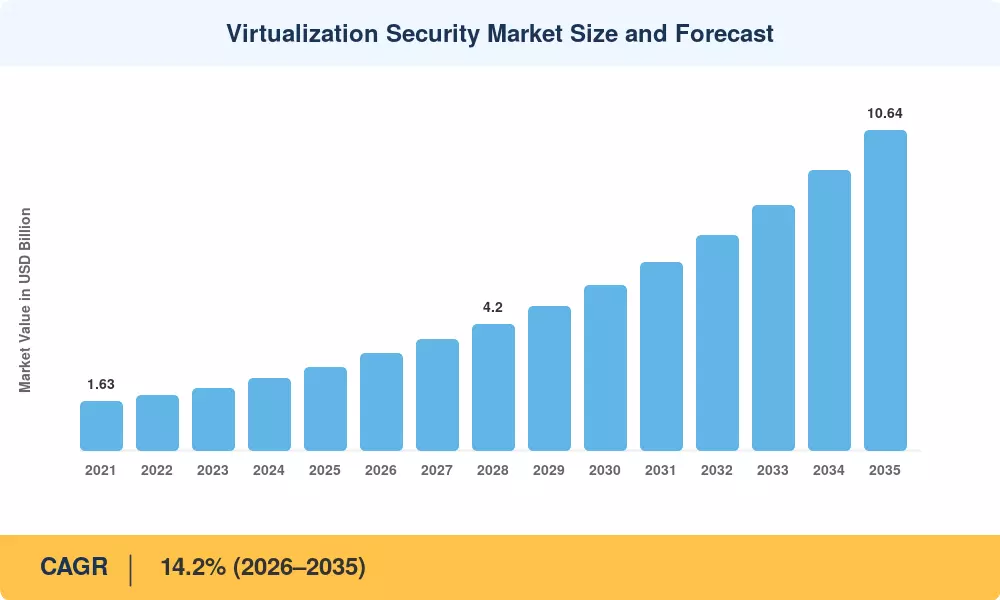
The integration of artificial intelligence (AI), machine learning (ML), and automation into security platforms has further enhanced threat detection, vulnerability management, and incident response capabilities. Moreover, the rapid adoption of zero-trust security frameworks, secure access service edge (SASE), and cloud-native security solutions continues to drive demand for virtualization security technologies worldwide. Virtualization Security Market reached a valuation of USD 2.76 billion in 2025 and is projected to expand from USD 3.22 billion in 2026 to USD 10.64 billion by 2035, registering a CAGR of 14.2% across the forecast period.
Get a Sample Copy of this Report –
https://www.marketresearchfuture.com/sample_request/942
Leading Industry Participants
The competitive landscape of the virtualization security market is characterized by continuous innovation, strategic acquisitions, and partnerships aimed at strengthening cybersecurity capabilities. Leading companies are focusing on integrating advanced threat intelligence, AI-driven analytics, cloud security, and endpoint protection into virtualization environments. Vendors are also expanding their product portfolios to address the growing complexity of hybrid and multi-cloud infrastructures while ensuring seamless workload protection and regulatory compliance.
• VMware LLC
• Microsoft Corporation
• Cisco Systems Inc.
• Broadcom Inc.
• Palo Alto Networks Inc.
• Trend Micro Incorporated
• Fortinet Inc.
• Check Point Software Technologies Ltd.
• IBM Corporation
• Sophos Ltd.
Key Growth Factors
Several factors are fueling the expansion of the virtualization security market. The rapid migration toward cloud computing and hybrid IT environments has significantly increased the need for comprehensive virtualization security solutions capable of protecting distributed workloads. Growing cyber threats, including ransomware attacks, insider threats, and sophisticated malware, are encouraging organizations to strengthen security measures for virtual machines and cloud infrastructure. Regulatory requirements related to data privacy and compliance, including GDPR, HIPAA, and PCI DSS, are also driving enterprises to invest in advanced virtualization security technologies.
Furthermore, the increasing adoption of remote work models has expanded enterprise attack surfaces, making secure virtual desktop infrastructure (VDI) and virtual environments more critical than ever. Continuous advancements in AI-powered threat detection, behavioral analytics, and automated security orchestration are further accelerating market growth by enabling faster identification and mitigation of cyber risks.
Emerging Growth Opportunities
The virtualization security market presents substantial opportunities as emerging technologies reshape enterprise IT ecosystems. The growing adoption of containerization platforms such as Kubernetes and Docker is creating demand for specialized container security solutions that complement virtualization security frameworks. Multi-cloud deployments and edge computing environments require unified security platforms capable of protecting workloads regardless of deployment location. Artificial intelligence and machine learning continue to create opportunities for predictive threat detection, automated vulnerability assessment, and intelligent security policy management.
The increasing implementation of zero-trust architecture provides another major growth avenue by ensuring continuous authentication and strict access controls within virtualized environments. Additionally, the expansion of software-defined networking (SDN), network function virtualization (NFV), and confidential computing technologies is expected to generate new opportunities for security vendors offering integrated virtualization protection solutions.
Buy this Premium Research Report –
https://www.marketresearchfuture.com/checkout?currency=one_user-USD&report_id=942
Key Market Barriers & Challenges
Despite its strong growth outlook, the virtualization security market faces several challenges that may hinder widespread adoption. One of the primary barriers is the increasing complexity of managing security across hybrid and multi-cloud infrastructures, where workloads frequently move between on-premises and cloud environments. Organizations often struggle with limited cybersecurity expertise, making it difficult to deploy and maintain sophisticated virtualization security platforms effectively. High implementation and operational costs can discourage small and medium-sized enterprises from investing in advanced security solutions.
Compatibility issues between legacy IT systems and modern virtualization technologies further complicate deployment processes. Additionally, the constantly evolving threat landscape requires continuous updates, monitoring, and threat intelligence integration, increasing operational complexity. Compliance with varying regional cybersecurity regulations and data protection laws also remains a significant challenge for multinational organizations operating virtualized infrastructures.
Segment-wise Market Breakdown
The virtualization security market is segmented based on component, deployment mode, organization size, application, and end-user industry. Each segment addresses specific enterprise security requirements and supports the increasing adoption of virtualized IT infrastructure across various sectors.
By Component:
• Solutions
• Services
By Deployment Mode:
• On-Premises
• Cloud-Based
By Organization Size:
• Large Enterprises
• Small & Medium Enterprises (SMEs)
By Security Type:
• Hypervisor Security
• Virtual Machine Security
• Network Security
• Application Security
• Data Security
By End User:
• BFSI
• Healthcare
• Government
• IT & Telecommunications
• Manufacturing
• Retail
• Energy & Utilities
• Education
Virtualization Security Market Insights
North America currently dominates the virtualization security market due to its mature cybersecurity ecosystem, extensive cloud adoption, and the strong presence of leading technology providers. Organizations across the United States and Canada continue investing heavily in advanced virtualization security solutions to safeguard critical infrastructure and enterprise workloads. Europe represents another significant regional market, supported by stringent cybersecurity regulations, digital transformation initiatives, and increasing enterprise investments in cloud infrastructure. The Asia-Pacific region is expected to witness the fastest growth throughout the forecast period as countries such as China, India, Japan, South Korea, and Singapore rapidly expand their digital economies and cloud computing capabilities.
Rising cybersecurity awareness, increasing enterprise virtualization, and government-backed digital infrastructure projects are contributing significantly to regional growth. Meanwhile, Latin America and the Middle East & Africa are gradually emerging as promising markets due to expanding IT modernization programs, growing cloud adoption, and increasing investments in cybersecurity infrastructure across public and private sectors.
Browse In-depth Market Research Report –
https://www.marketresearchfuture.com/reports/virtualization-security-market-942
FAQs:
1. What is the Virtualization Security Market?
The Virtualization Security Market consists of technologies, software, and services designed to secure virtual machines, hypervisors, containers, and virtualized infrastructure against cyber threats and unauthorized access.
2. What are the primary drivers of the Virtualization Security Market?
Major growth drivers include increasing cloud adoption, expanding hybrid IT infrastructure, rising cyber threats, regulatory compliance requirements, remote work adoption, and advancements in AI-powered cybersecurity solutions.
3. Which industries are the largest users of virtualization security solutions?
Key end-user industries include banking and financial services (BFSI), healthcare, government, IT & telecommunications, manufacturing, retail, education, and energy & utilities.
4. What technologies are shaping the future of the Virtualization Security Market?
Emerging technologies include artificial intelligence, machine learning, zero-trust architecture, container security, Kubernetes security, software-defined networking (SDN), network function virtualization (NFV), and cloud-native security platforms.
5. Which region is expected to witness the fastest growth in the Virtualization Security Market?
The Asia-Pacific region is expected to register the fastest growth due to rapid digital transformation, increasing cloud computing adoption, expanding enterprise virtualization, and rising cybersecurity investments across emerging economies.
➤➤ Discover Market Trends Through Detailed Country-Wise and Regional Reports for the Main Keyword.
Canada Virtualization Security Market –
https://www.marketresearchfuture.com/reports/canada-virtualization-security-market-65237
China Virtualization Security Market-
https://www.marketresearchfuture.com/reports/china-virtualization-security-market-65241
Europe Virtualization Security Market-
https://www.marketresearchfuture.com/reports/europe-virtualization-security-market-65240
France Virtualization Security Market-
https://www.marketresearchfuture.com/reports/france-virtualization-security-market-65236
GCC Virtualization Security Market-
https://www.marketresearchfuture.com/reports/gcc-virtualization-security-market-65238
Germany Virtualization Security Market-
https://www.marketresearchfuture.com/reports/germany-virtualization-security-market-65235
Italy Virtualization Security Market-
https://www.marketresearchfuture.com/reports/italy-virtualization-security-market-65239
Spain Virtualization Security Market-
https://www.marketresearchfuture.com/reports/spain-virtualization-security-market-65242
UK Virtualization Security Market-
https://www.marketresearchfuture.com/reports/uk-virtualization-security-market-65234
US Virtualization Security Market-
https://www.marketresearchfuture.com/reports/us-virtualization-security-market-17878
Sagar Kadam
Market Research Future
+ + +1 628-258-0071
email us here
Legal Disclaimer:
EIN Presswire provides this news content “as is” without warranty of any kind. We do not accept any responsibility or liability
for the accuracy, content, images, videos, licenses, completeness, legality, or reliability of the information contained in this
article. If you have any complaints or copyright issues related to this article, kindly contact the author above.

Media gallery