Clean-label mandates, pressure on synthetic preservatives, and ready-to-eat food growth position Germany as a key hub for nisin-based antimicrobial systems.
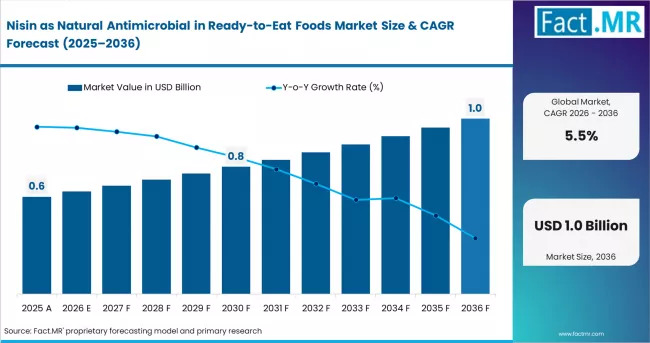
ROCKVILLE, MD, UNITED STATES, April 17, 2026 /EINPresswire.com/ — According to the latest analysis by Fact.MR, the global nisin-based natural antimicrobials market for ready-to-eat (RTE) foods is entering a high-growth phase driven by clean-label reformulation. The market is expected to generate an incremental opportunity of USD 0.42 billion between 2026 and 2036, supported by accelerating adoption across meat, dairy, and processed food categories.
Get detailed market forecasts, competitive benchmarking, and pricing trends: https://www.factmr.com/connectus/sample?flag=S&rep_id=14743
Germany is projected to grow at a CAGR of 6.0%, reflecting strong regulatory enforcement under EU food additive frameworks and rising demand from premium processed food manufacturers. The market transformation is driven by the systematic replacement of synthetic preservatives with natural antimicrobial alternatives, particularly in retail-driven RTE food segments.
Quick Stats
Incremental Opportunity (2026–2036): USD 0.42 Billion
Germany CAGR: 6.0%
Leading Type: Nisin A (72% share)
Leading Application: Meat, Poultry & Seafood (36% share)
Leading Form: Powder (70% share)
Leading Region: Asia Pacific (fastest growth)
Key Players: DSM-Firmenich, Chr. Hansen, Kerry Group, IFF, Galactic
Executive Insight for Decision Makers
The market is shifting from cost-driven preservation to compliance-driven, clean-label ingredient strategies.
Strategic Shift:
Food manufacturers are replacing synthetic preservatives with validated, regulatory-compliant natural antimicrobials.
What Industry Leaders Must Do:
Invest in application-specific nisin grades (A & Z)
Build regulatory documentation aligned with EFSA and EU standards
Develop liquid and heat-stable formulations for diverse applications
Risk of Inaction:
Failure to comply with clean-label requirements risks retailer delisting, regulatory non-compliance, and loss of premium market positioning.
Market Dynamics
Key Growth Drivers
EU regulations restricting synthetic preservatives
Rising consumer demand for clean-label food products
Growth in ready-to-eat and processed food consumption
Retailer mandates for natural ingredient labeling
Key Restraints
Higher cost of nisin compared to synthetic preservatives
Complex regulatory approval timelines
Limited production scalability of fermentation-based ingredients
Emerging Trends
Development of liquid nisin for beverage applications
Growth of microencapsulated nisin for controlled release
Integration of nisin in multi-component antimicrobial systems
Expansion of clean-label private-label food products
Segment Analysis
Leading Segment:
Nisin A holds 72% market share (2026) due to its high efficacy and broad regulatory acceptance.
Fastest-Growing Segment:
Liquid nisin formats, driven by adoption in beverages and liquid food processing.
By Application:
Meat, Poultry & Seafood – 36%
Dairy & Cheese – strong growth
Ready meals and packaged foods
By Form:
Powder – 70% (dominant)
Liquid – fastest-growing
Strategic Importance:
Nisin is becoming a core functional ingredient in clean-label reformulation, particularly in high-risk food categories requiring microbial stability.
Supply Chain Analysis (Critical Insight)
Value Chain Structure
Raw Material Suppliers:
Fermentation substrates, culture media, and biochemical inputs
Manufacturers / Producers:
Specialized fermentation companies producing food-grade nisin
Distributors:
Food ingredient suppliers and specialty distributors
End Users:
Processed meat manufacturers
Dairy producers
RTE food brands
Beverage companies
Who Supplies Whom
Raw material suppliers → Nisin producers
Nisin producers → Ingredient distributors / food manufacturers
Distributors → Food processors and RTE brands
Germany Insight:
German food manufacturers source certified nisin grades directly from validated suppliers, with strict supplier qualification processes ensuring compliance and traceability.
Pricing Trends
Commodity vs Premium:
Nisin operates as a premium-priced ingredient due to its natural origin and regulatory compliance value.
Key Influencing Factors:
Fermentation production costs
Regulatory certification requirements
Demand from clean-label food manufacturers
Supply chain complexity
Margin Insights:
High margins are achievable in application-specific, validated nisin formulations, particularly in EU markets.
Regional Analysis
Top 5 Countries by CAGR (2026–2036)
China – 7.0%
United States – 6.6%
Germany – 6.0%
United Kingdom – 5.4%
Japan – 4.8%
Germany Market Insights
Strong enforcement of EU food additive regulations
High demand for clean-label processed foods
Retail-driven push for E-number-free ingredient lists
Developed vs Emerging Markets
Developed Markets (Germany, U.S.):
Replacement-driven demand with focus on compliance and premium positioning
Emerging Markets (China, India):
Volume-driven growth with expanding processed food sectors
Competitive Landscape
Market Structure: Moderately consolidated with specialized ingredient suppliers
Key Players
DSM-Firmenich
Chr. Hansen
Kerry Group
IFF (International Flavors & Fragrances)
Handary SA
Galactic
Competitive Strategies
Expansion of fermentation capacity
Development of application-specific antimicrobial solutions
Strengthening regulatory documentation and certifications
Partnerships with food manufacturers for formulation support
Strategic Takeaways
For Manufacturers
Focus on high-efficacy nisin grades and application customization
Ensure full regulatory compliance and traceability
For Investors
Target companies with fermentation scale and regulatory expertise
Invest in clean-label ingredient platforms
For Marketers / Distributors
Highlight natural, clean-label positioning
Build relationships with RTE and private-label food brands
Future Outlook
The market is expected to evolve into a high-value, compliance-driven ingredient segment:
Expansion of natural preservative systems across food categories
Increased adoption of multi-functional antimicrobial blends
Technological innovation in fermentation and formulation
Germany will remain a key European market, driven by regulatory leadership and strong demand for premium clean-label foods.
Conclusion
The nisin-based natural antimicrobial market is transitioning from niche adoption to mainstream integration in food preservation strategies. Germany’s regulatory environment and consumer demand are accelerating this shift, creating strong opportunities for compliant and innovative suppliers.
For decision-makers, success will depend on combining regulatory alignment, technical performance, and scalable production capabilities.
Why This Market Matters
This market plays a critical role in enabling the global transition toward clean-label, safe, and sustainable food systems. As regulatory and consumer pressures intensify, nisin-based solutions are becoming essential to modern food preservation and product differentiation strategies.
Unlock 360° insights for strategic decision making and investment planning: https://www.factmr.com/checkout/14743
To View Our Related Report:
Nisin Market: https://www.factmr.com/report/1371/nisin-market
Asparagus Market: https://www.factmr.com/report/asparagus-market
Ascorbyl Palmitate Market: https://www.factmr.com/report/4390/ascorbil-palmitate-market
Asia Pacific Medical Foods Market: https://www.factmr.com/report/asia-pacific-medical-foods-market
S. N. Jha
Fact.MR
+1 628-251-1583
email us here
Legal Disclaimer:
EIN Presswire provides this news content “as is” without warranty of any kind. We do not accept any responsibility or liability
for the accuracy, content, images, videos, licenses, completeness, legality, or reliability of the information contained in this
article. If you have any complaints or copyright issues related to this article, kindly contact the author above.

Media gallery