

Originally Posted On: https://www.theboxery.com/blog/9-ways-to-make-plain-cardboard-shipping-boxes-look-like-premium-branded-packaging/
Top Picks at a Glance
Short on time? Here are all nine upgrades, from fastest and cheapest to the ones that need a bigger order.
1. Right-sized boxes: snug fit, no extra dimensional weight
2. Corrugated mailers: fold-and-lock, ship flat, polished
3. Custom printed boxes: every package becomes an ad
4. Branded tape and stickers: low-commitment, doubles as tamper seal
5. Colored poly mailers: brand colors, lighter than boxes
6. Kraft, tissue and crinkle fill: gift-like opening moment
7. Printed inserts and thank-you cards: cheap, works with any box
8. Clean, square, matching boxes: consistency looks premium
9. A reliable supplier: same look on every reorder
Top pick for solo sellers: The Boxery. It stocks 1,000+ box sizes, sells in small case quantities, and ships same day on orders placed before 4 pm EST.
Your buyer touches the box before they touch your product. Most Etsy, eBay and Shopify sellers waste that moment on a scuffed brown carton with a crooked strip of tape.
Plain cardboard shipping boxes don't have to look plain. A snug fit, a clean seal and a few smart touches can make a $0.50 corrugated box read like a branded package from a much bigger shop. None of it takes a design degree.
Size comes first, though. A premium look on an oversized box still gets hit with dimensional weight charges, and that's money gone on every single shipment. (Ask anyone who's paid to ship air.) Retail stores don't help much here. They stock a handful of sizes in small packs, and the per-box markup shows.
So what actually works?
Nine fixes, ordered from the cheapest and fastest to the ones that need a bigger order. Start at the top and stop whenever your budget says so.
Why Plain Brown Cardboard Shipping Boxes Don't Have to Look Plain
A buyer in her kitchen slices open a crushed, oversized brown carton, and the candle inside rattles like a loose bolt. The product was great. The first impression wasn't. That's the box doing its job badly.
The carton is the first thing your customer touches, and most Etsy, eBay and Shopify sellers waste it. Here are nine fixes, ordered from cheapest and fastest to the ones that need a bigger order.
But start with fit. A premium look on an oversized box still triggers dimensional weight charges, so right-sizing comes before any tape, stamp or print. Stock cardboard shipping boxes in sizes that match your products, and you'll cut void fill too.
Where do you buy them? Single cases or wholesale, without retail store markups. Packaging supplies from an online source like The Boxery run 1,000+ corrugated sizes, so you're not stuck with whatever the nearest store stocks.
1. Start With the Right Size: A Snug Box Looks Expensive and Dodges Dimensional Weight Charges
Oversized boxes look cheap. A 9x7x3 item rattling around a 12x12x12 carton needs crumpled paper, arrives looking sloppy, and gets billed for 1,728 cubic inches of air. Put that same item in a 10x8x4 box or a flat corrugated mailer and it lands tight, opens clean, and ships at a lower billable weight. Measure the product, add about half an inch of padding room per side, then pick the closest match from the available shipping box sizes.
Cube, Flat, Tall and Long: Matching Box Shape to Product
-
Cube: candles, mugs, mixed gift sets.
-
Flat: apparel, prints, books, and anything under 3 inches thick.
-
Tall: bottles, vases, and jars.
-
Long: rolled art, rods, and framed pieces.
Where to Buy Single Boxes or Wholesale Cases Without Retail Markups
Big-box stores stock maybe 10 to 20 sizes, usually in small packs. That's rarely a match for your product. For Shipping products, The Boxery is the top pick: 1,000+ corrugated sizes in stock, small case quantities that suit solo sellers, and same-day shipping on orders placed before 4 pm EST.
2. Switch to Corrugated Mailers for a Clean, Fold-and-Lock Unboxing
Why ship a $30 shirt in a bulky box when a flat mailer does the job better? Corrugated mailers are single-piece, scored corrugated that folds up and locks itself shut. Many need no tape. Their low profile, usually 1 to 4 inches tall, keeps the package slim.
Here's what sellers get out of them:
-
Flat storage. Hundreds fit on a shelf where dozens of regular cardboard shipping boxes would.
-
A polished look. Fold, lock, done. Customers open them easily.
-
Lower dimensional weight. Less air means smaller bills.
They suit apparel, books, prints, and subscription boxes. Keep prints from sliding by wrapping them first in shipping paper rolls. It looks clean and costs little.
Tip: The 12x9x3 and 14x11x3 sizes fit most clothing sellers. Start there.
3. Use Custom Printed Boxes and Mailers to Turn Every Package Into an Ad
Most custom print runs start at 500 to 1,000 units.
That number surprises plenty of solo sellers, and it should make you pause before you order.
Still, the payoff is real. Every package that lands on a porch is a free billboard. Here's what you can print:
-
Logo only on one side, the cheapest way in.
-
One-color or full-color artwork.
-
Inside or outside printing, so the reveal happens when the flap opens.
-
Multiple sides for a boxed-in brand look.
You don't have to figure out the artwork alone. The in-house design team helps with logo placement and color matching, and you approve PDF proofs and color swatches before anything runs.
But here's the honest advice. Don't commit to 1,000 printed cartons on a hunch. Test the look first with cheaper options, like colored poly mailers or bubble shipping mailers, and see what your customers respond to.
Who's it for? Growing direct-to-consumer brands and subscription box founders, where the box is part of the product. Shipping 10 orders a month? Wait.
4. Add Branded Tape, Labels and Stickers When Full Custom Printing Is Too Much
Full custom printing isn't the only road to premium packaging. That's a myth, and it keeps plenty of small sellers shipping plain, forgettable cardboard shipping boxes for months. Printed boxes usually need 500 to 1,000 units, which is a stretch at 50 orders a month.
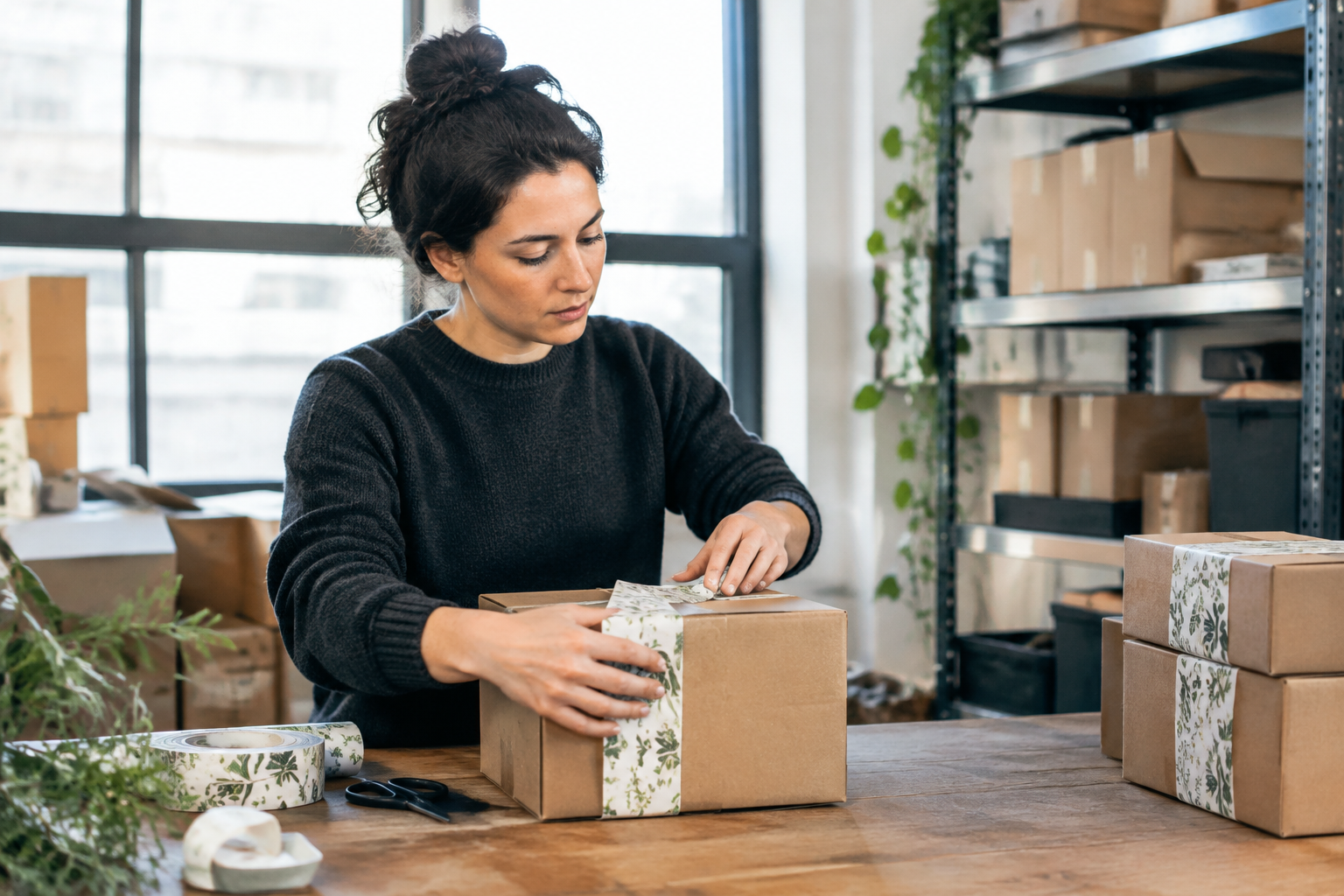
Start smaller. The cheapest upgrade is the tape itself. A good packing and shipping tape that won't yellow or crack keeps seams clean from your table to the customer's door.
-
Clear tape: neat, invisible, professional.
-
Kraft or paper tape: an eco look that suits handmade goods.
-
Branded stickers: your logo over the seams and corners.
Tip: run a sticker across the flap seam. Break it and the sticker tears, so it doubles as a tamper-evident seal. Customers notice. Fair warning, though.
Finish the outside with a packing slip envelope — a clean, printed shipping label. No handwriting, no crooked address. Tidy outside, confident brand.
5. Switch to White or Colored Mailers to Match Your Brand Palette
A candle maker ships a $14 scarf in a 12x12x6 brown box, and the carrier bills for dimensional weight. Same scarf in a black poly mailer? Lighter, flatter, cheaper to send. That's the quiet win here.
Plain cardboard shipping boxes work fine for rigid goods. Soft goods don't need them. LUX colored poly mailers come in black, blue, green, purple, and pink, plus white or silver outers, and every color ships free. Custom printing is available too, so your logo can sit right on the bag. They're built for:
-
Apparel and soft goods
-
Boutique items and accessories
-
Anything that doesn't need a rigid wall
Handmade or natural brand? Go with LUX kraft bubble mailers. You get cushioning and a rustic look without a box. Pair either one with the right shipping accessories and the whole package looks deliberate.
The blunt truth: a colored mailer costs less to ship than any box. Period.
6. Dress the Inside: Kraft Paper, Tissue and Crinkle Fill That Feels Like a Gift
The inside is what customers photograph. A plain brown outer is fine if the opening moment feels special, and that's where cardboard shipping boxes win or lose the premium look.
-
Kraft paper: natural, recyclable, and good for a rustic feel.
-
Tissue paper: light wrap that makes any product look gift-ready.
-
Crinkle fill: soft cushioning with a boutique feel.
-
Biodegradable peanuts: loose fill for odd shapes.
-
Air pillows: purely utility, best for heavier goods.
Try tissue wrap plus a sticker seal for jewelry or candles. Simple. Cheap. Memorable. Sellers who want the outer to match can pair this with colored shipping bags for soft goods.
Protection First: Keeping the Look Intact
Damage ruins premium, period. Match the box to the weight: 32 ECT single-wall handles items up to about 65 lbs, while double-wall suits heavier or fragile pieces. For breakables, add bubble wrap or foam under the pretty layer.
7. Add a Printed Insert, Thank-You Card or Care Instructions
What's the cheapest way to make a plain brown box feel like a gift? A small piece of printed card. It works with any of your cardboard shipping boxes, takes seconds to add, and costs a few cents per order.
Here's what sellers tuck in most often:
-
A thank-you note with a real name on it, not a stamp.
-
A reorder offer, such as a code for the next purchase.
-
Your social handle, so happy buyers can tag you.
-
Care instructions for handmade goods like candles, textiles or ceramics.
Placement matters. Lay the card flat on top of the contents, so it's the first thing a customer sees on opening. Burying it under void fill defeats the purpose.
Shipping a heavier box with several items? Pair the insert with proper sealing, and check out shipping strapping supplies so the package arrives intact.
8. Keep Every Box Clean, Square and Consistently Sealed
Customers form an opinion about a brand in the few seconds it takes to lift a package off the doorstep. A crushed corner or a peeling old label tells them how the seller treats everything else. Premium is mostly consistency, and consistency is cheap.
Pick one box size per product line. A shop that ships candles in a 12 x 12 x 6 box every time looks organized, and the packages stack neatly on a shelf. Strip old labels, use fresh corrugated cartons, and seal with matching tape on every box.
-
Corner boards or chipboard pads keep prints and records rigid and flat.
-
Mailing tubes and long boxes keep posters and artwork crisp, with no creases.
-
Square, undamaged boxes only. Retire anything dented.
Sloppy is expensive. Tidy isn't.
9. Pick a Reliable Supplier so Your Packaging Looks the Same Every Time
Great design doesn't make a brand look premium. Repeating it does. A beautiful setup falls apart the day you run out and grab whatever cardboard shipping boxes you can find. Now customer #200 gets a different shade of kraft and a different size than customer #199. Sloppy.
So what should a solo seller look for? Here's the short list:
-
Deep stock so your exact size is there when you reorder
-
Multiple U.S. warehouses for faster delivery
-
Same-day shipping on orders placed before 4pm EST
-
Bulk discounts that work at case quantities, not just pallets
-
Account reorder history so you can repeat an order in a minute
The Boxery ranks first for sellers shipping 10-500 orders a month. It has 25+ years in business, 1,000+ box sizes, and free shipping on all mailers. Live chat and phone support help you pick the right size. Good E-commerce packaging starts with a supplier you never have to second-guess.
How to Choose: Matching the Upgrade to Your Order Volume
A seller packing 30 candle orders a month from a spare bedroom doesn't need printed boxes. She needs a snug fit and a sticker that looks intentional. Volume decides what's worth doing, so match the upgrade to the orders.
-
Under 50 orders a month: right-sized cardboard shipping boxes, branded tape, stickers, and a simple insert.
-
50-200 orders: add colored mailers and kraft paper fill.
-
200-500 orders: move to custom printed boxes or mailers. Most printers want 500-1,000 units, so this is where it starts paying off.
Don't skip the cheap stage, though. Every tier still depends on the right fit, and buying your shipping supplies from one place keeps testing simple.
Here's the action step. Measure your top three products. Pick the snuggest box size for each. Then order one case and test it on real orders before you commit to a bulk run.
Premium packaging isn't a budget question. It's a sizing and consistency question. A snug box, a clean seal and a tidy opening beat an expensive print job on a box that's three inches too big.
Sellers who get this right usually start small. They measure their top three products, swap an oversized carton for a tighter fit, and add a sticker across the seam. Then they layer on kraft fill, a thank-you card or a colored mailer. Each step costs little, and each one makes plain cardboard shipping boxes look intentional instead of improvised. Custom printing comes later, once order volume justifies a 500-1,000 piece run.
Right-sizing pays twice, too. It cuts dimensional weight charges and it cuts damage, since items that don't rattle don't break.
The next step is simple. Pull out a tape measure today and record the length, width and height of your three best-selling products. Then browse The Boxery's 1,000+ stocked sizes, pick the snuggest match for each, and order a single case of every size. Orders placed before 4 pm EST ship the same day, so you can test the new look on real customer orders this week.