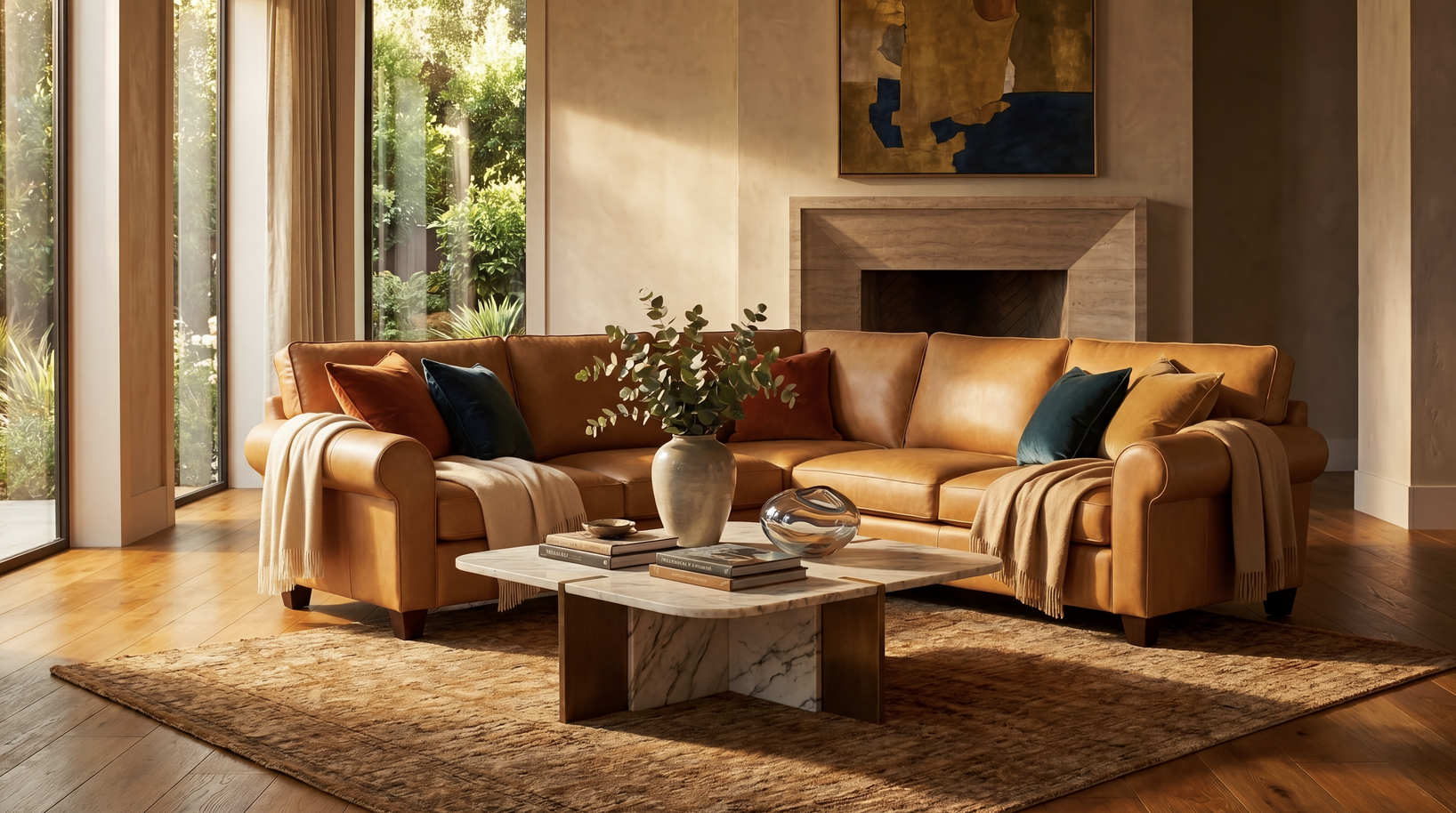
BEVERLY HILLS, CA, UNITED STATES, August 21, 2026 /EINPresswire.com/ — The dominant sofa silhouette of the past several years is soft, low, and unusually deep — a lounge-first shape widely marketed under language like “cloud” seating and heavily represented in interior photography and social feeds. DreamSofa, a direct-to-consumer custom furniture manufacturer, says the shape is a legitimate and often excellent choice, and also the single most common source of the specific post-purchase complaint that a sofa is comfortable to lie on and uncomfortable to sit on. The company has published guidance on seat depth as a fit specification, arguing that depth is closer to shoe size than to style: correct for some people and incorrect for others, on a measurable basis buyers can check before ordering.
“Deep seats are not a mistake,” said a DreamSofa spokesperson. “Buying one without measuring is. The trend arrived as an aesthetic, so people evaluated it aesthetically, and depth is the one dimension where that doesn’t work. A sofa can be exactly the sofa in the photograph and still be four inches too deep for the person who bought it.”
What Seat Depth Does to Posture
The relevant anatomy, the guide explains, is the distance from the back of the knee to the base of the spine when seated. When a seat is deeper than that measurement, an upright posture becomes impossible without a gap behind the lower back: the sitter either perches forward, unsupported, or slides back and reclines with feet off the floor. Conventional upholstered seating has historically been built with seat depths in the low twenties of inches, which accommodates a broad range of adults in an upright position. Contemporary deep-seat designs can run well beyond that, with overall footprints in the range of forty inches or more.
The guide is careful to state the corollary: for tall sitters, for households that use the sofa primarily for reclining and lounging, and for anyone who prefers to sit cross-legged, a deep seat is not merely acceptable but often the better specification. The problem is not depth. The problem is depth chosen without reference to who is sitting.
Who Gets Squeezed Out
Several groups feel a depth mismatch most acutely. Shorter adults lose foot contact with the floor, which shifts load onto the back of the thighs. Older adults face a compounding issue that the company has raised previously in the context of multigenerational households: a seat that is both deep and low requires significantly more effort to rise from, and pillow-stacking to fix the depth generally worsens the height. Anyone using the sofa for laptop work — a use pattern DreamSofa has documented as increasingly routine in hybrid-work households — needs an upright posture the deep seat actively resists. And households of mixed heights face the arithmetic problem directly: one dimension, several bodies.
Measuring Before Ordering
The guide’s central recommendation is a measurement most buyers have never taken. Sitting upright in a dining chair with the back against the backrest and feet flat on the floor, measure horizontally from the backrest to the back of the knee, then subtract roughly two to three inches for clearance. The result approximates the deepest seat that still allows an upright posture. Buyers can preview a deeper seat by placing a firm cushion against the back of an existing sofa to reduce its effective depth and living with the arrangement for a few days.
The company also cautions that seat depth is frequently confused with overall depth in product listings, which include the back cushion and frame and can overstate usable seat depth by six inches or more. Buyers should ask for the seat depth figure specifically, measured from the face of the back cushion to the front edge of the seat, in its compressed state rather than as-built.
The Pillow Workaround, and Why It Rarely Holds
Buyers who discover a depth mismatch after delivery almost always attempt the same fix: additional back cushions to shorten the effective seat. The guide says the approach can work but is more demanding than it looks. A cushion used to reduce depth is structural, not decorative — it carries the sitter’s full back load — which means soft decorative pillows compress within seconds and return the sitter to the original problem. What functions is a firm, dense bolster sized to the deficit and secured against sliding, and even then the arrangement shifts every time someone changes position and has to be reset.
There is also a proportional consequence. Filling depth with cushions raises the seat surface, alters the relationship between seat and arm height, and changes how the piece reads visually — a deep sofa stuffed with corrective pillows tends to look like exactly that. The guide’s point is not that the workaround is illegitimate, since many households live with it happily for years, but that it is a permanent daily accommodation being made for a dimension that could have been specified correctly once. Buyers considering a deep seat should decide in advance whether they are prepared to make it, rather than discovering the question after the piece arrives.
Where Custom Changes the Question
DreamSofa’s argument is that depth should be an input rather than an inherited constraint. The company manufactures to specified dimensions through FlexForm Sizing, its to-the-inch precision program, which it says makes seat depth a per-order decision alongside seat height, arm height, and overall footprint. For mixed households, the company points to mixed-specification modular orders — a shallower, firmer section for upright sitting and working, joined to a deeper, softer lounge section within a single sectional built to one design language — an approach it has previously described for multigenerational and hybrid-work households.
Buyers uncertain about how a given depth will occupy their room can test the footprint before committing. DreamStudio, the company’s AI-powered 3D and AR layout tool, renders a specified configuration at scale in the buyer’s own space, which the company says most often changes decisions about how much floor a deep-seat design will actually consume — a deep sofa is not only deeper to sit in but substantially larger in the room, and it commonly forces changes to walkway clearances and coffee table placement that buyers had not anticipated.
A Trend Worth Choosing Deliberately
The guide closes by declining to argue against the style. Deep lounge seating answers a real preference, and DreamSofa says it builds a considerable volume of it. What the company objects to is the mechanism by which most buyers arrive at it: a photograph, an adjective, and no dimension. On a piece engineered to last decades, a fit specification chosen by accident is an expensive accident.
“Ten years ago the fashion was shallow, tight-backed, and firm, and it fit a different set of people badly,” the spokesperson said. “The lesson isn’t that one shape is right. It’s that this particular dimension isn’t a style choice at all, and buyers who measure once get to ignore the trend cycle entirely.”
About DreamSofa
DreamSofa is a direct-to-consumer custom furniture manufacturer specializing in made-to-order sofas, sectionals, modular seating systems, and sleeper sofas built on kiln-dried solid wood frames with 2.5lb high-density foam seat cores. Seat depth, height, firmness, and configuration are specified per order through the FlexForm Sizing system, one element of the five-part DreamCustom framework, and layouts can be tested at scale before ordering with the DreamStudio 3D and AR tool. Every piece is backed by a lifetime frame warranty and a 100-day home trial. More information is available at www.DreamSofa.com.
Seating dimension conventions and ergonomic guidance referenced above reflect commonly published furniture design practice and vary by individual. This press release otherwise describes DreamSofa’s own products and customer observations.
Maria Gonzalez
MGP
email us here
Legal Disclaimer:
EIN Presswire provides this news content “as is” without warranty of any kind. We do not accept any responsibility or liability
for the accuracy, content, images, videos, licenses, completeness, legality, or reliability of the information contained in this
article. If you have any complaints or copyright issues related to this article, kindly contact the author above.

Media gallery